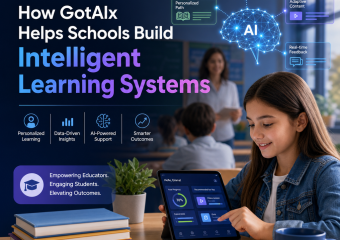

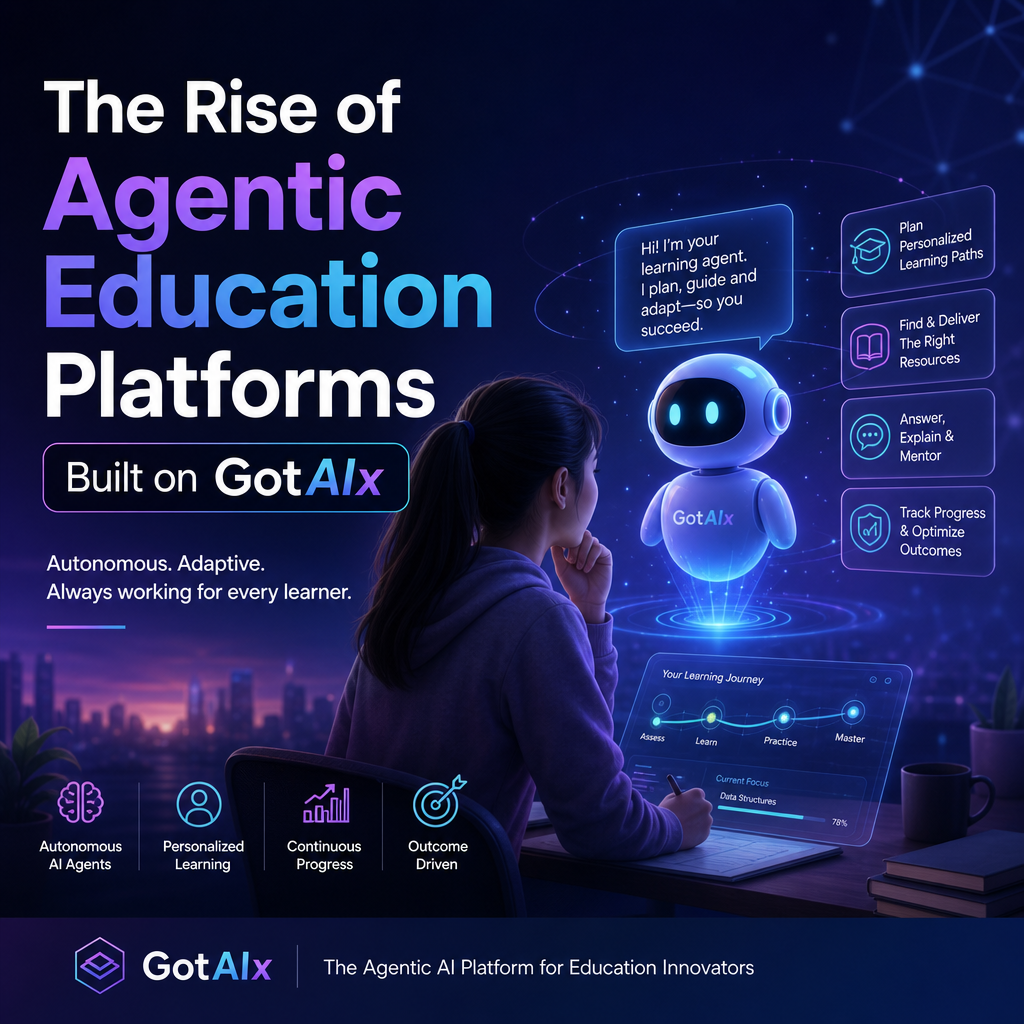
The Rise of Agentic Education Platforms Built on GotAIx
Why Agentic Learning Is Gaining Momentum
Education technology is moving beyond static content libraries and simple chatbots. A new wave of tools is emerging that can plan, adapt, act, and support learners in real time. This shift is fueling the rise of agentic education platforms built on GotAIx, where AI is no longer just a passive assistant but an active learning partner.
Traditional digital learning platforms often rely on fixed pathways. Students watch a lesson, take a quiz, and move on. That model works to a point, but it struggles to meet the needs of learners with different goals, pacing, and skill gaps.
Agentic systems change the equation. Instead of only answering questions, they can guide learning journeys, recommend next steps, identify weak areas, and coordinate tasks across a broader educational environment. Built on GotAIx, these platforms are starting to make personalized education feel more practical and scalable.
What Makes a Platform “Agentic”?
An agentic education platform does more than react. It can take initiative within defined boundaries to support outcomes.
Core traits of agentic platforms
- Goal awareness: The platform understands what a student is trying to achieve.
- Adaptive planning: It can build or adjust learning paths based on progress.
- Context retention: It remembers prior interactions, strengths, and struggles.
- Task execution: It can schedule activities, recommend resources, or trigger interventions.
- Continuous feedback: It tracks performance and refines support over time.
In education, these features matter because learning is rarely linear. Students need different forms of help at different times, and teachers need tools that extend their reach rather than add more complexity.
Why GotAIx Is a Strong Foundation
The rise of agentic education platforms built on GotAIx is not happening by accident. Platforms need infrastructure that supports orchestration, reasoning, integration, and scale. GotAIx provides a foundation for building systems that behave more like intelligent collaborators than isolated tools.
With the right architecture in place, developers can create learning agents that work across multiple functions, such as:
- tutoring and explanation
- curriculum mapping
- assessment support
- student engagement monitoring
- teacher workflow automation
This matters because schools, universities, and training organizations are not looking for one more disconnected app. They want systems that fit into real educational workflows and produce measurable value.
How These Platforms Improve Learning
The biggest promise of agentic education is not novelty. It is meaningful improvement in how learning happens.
Personalized pathways at scale
One of the hardest challenges in education is personalization. Teachers can tailor support only so far when they manage large groups. Agentic platforms built on GotAIx can analyze learner behavior and adjust content, pacing, and review strategies without requiring constant manual intervention.
A student struggling with algebra, for example, may be redirected to foundational concepts before moving ahead. Another student who masters material quickly may receive advanced exercises or project-based challenges.
More timely interventions
Many learners fall behind quietly. By the time a teacher spots the issue, the gap may already be significant. Agentic systems can detect patterns early, such as repeated errors, low participation, or stalled progress.
That allows the platform to:
- offer targeted practice
- notify educators
- suggest study plans
- prompt the learner with encouragement or guidance
This kind of timely action can improve both performance and confidence.
Better support for educators
Agentic platforms are not just for students. They can also reduce administrative pressure on teachers by helping with planning, feedback summaries, resource recommendations, and progress reporting.
Instead of replacing educators, the best systems free them to focus on instruction, mentorship, and human connection.
Real-World Use Cases Emerging Now
The rise of agentic education platforms built on GotAIx is especially visible in environments where adaptability matters most.
K-12 learning support
Schools can use agentic platforms for differentiated instruction, homework assistance, and early intervention. Students receive help matched to their level, while teachers gain clearer visibility into learning trends.
Higher education
Universities are exploring AI agents that support research, advising, writing feedback, and course navigation. This is especially useful in large programs where students often struggle to find individualized guidance.
Workforce and corporate training
In professional learning, agentic systems can align training with role requirements, performance goals, and compliance needs. Instead of generic modules, employees get learning journeys tied to real outcomes.
Challenges That Still Need Attention
The excitement around agentic education should be balanced with care. These systems must be designed responsibly.
Key concerns include:
- data privacy and student protection
- bias in recommendations or assessments
- transparency in how decisions are made
- clear human oversight
- alignment with curriculum and institutional standards
Trust will be essential. Schools and learners need confidence that agentic platforms are safe, explainable, and educationally sound.
What the Future May Look Like
As the technology matures, agentic education platforms will likely become more collaborative, multimodal, and deeply integrated into everyday learning. Students may interact with AI agents that not only explain concepts but also coordinate projects, simulate real-world scenarios, and adapt instruction across subjects.
For institutions, the opportunity is larger than automation. It is about building learning environments that are more responsive, inclusive, and effective.
That is why the rise of agentic education platforms built on GotAIx matters. It signals a move toward educational systems that can actively support each learner’s journey, while still keeping educators at the center. If implemented thoughtfully, this new model could help close long-standing gaps between what learners need and what traditional platforms can deliver.