
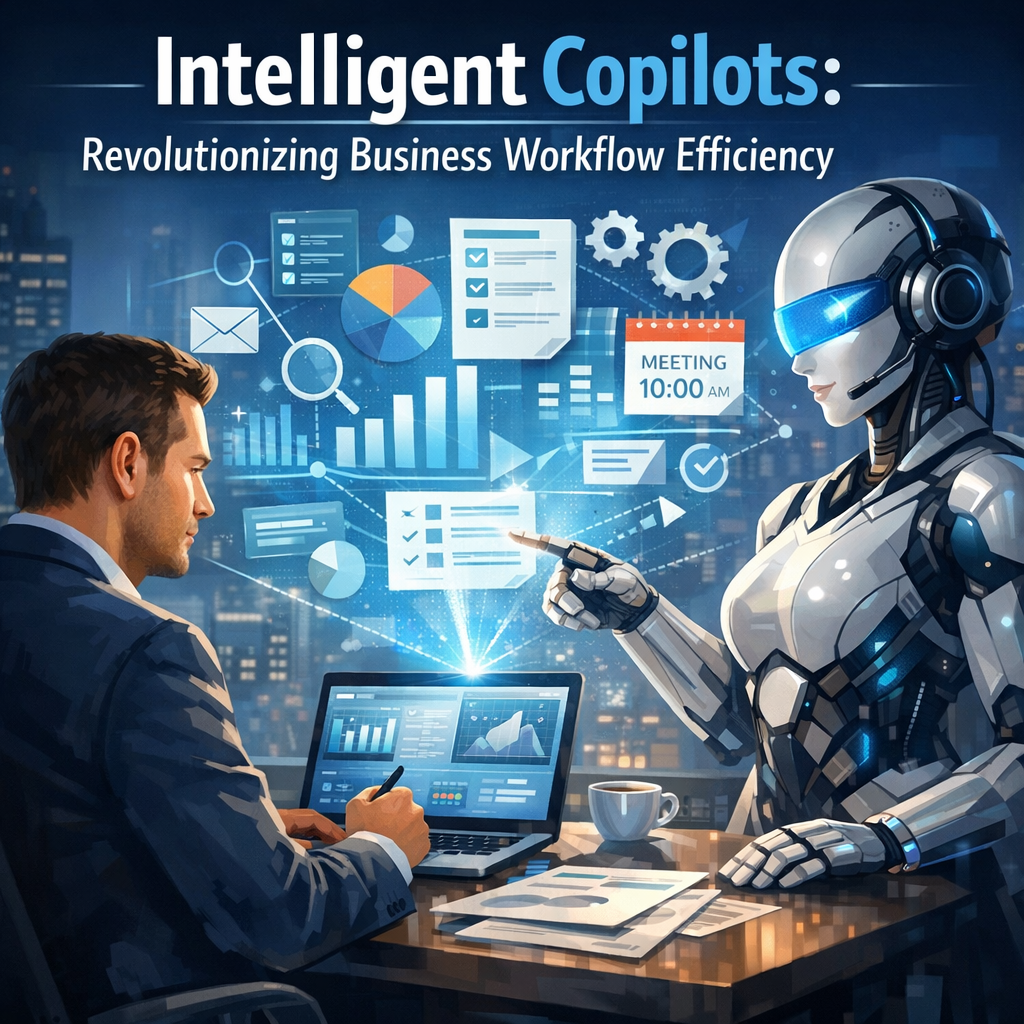
Intelligent Copilots: Revolutionizing Business Workflow Efficiency
How Intelligent Copilots Transform Business Workflows
In today’s rapidly advancing business landscape, intelligent copilots are revolutionizing the way organizations operate. These AI-driven systems enhance productivity, streamline processes, and enable companies to scale new heights in efficiency and innovation. Here’s a closer look at the transformative effect of intelligent copilots on business workflows.
Understanding Intelligent Copilots
Intelligent copilots are advanced AI tools that assist human operators in managing and executing various business tasks. These systems are designed to understand context, predict needs, and provide recommendations, greatly simplifying decision-making processes in a corporate setting.
Key Benefits of Implementing Intelligent Copilots
Enhanced Decision Making
With real-time data analysis and predictive analytics, intelligent copilots provide businesses with insights that were previously unattainable. These AI systems analyze vast amounts of data to identify trends and patterns, thus aiding in more informed decision-making.
Increased Productivity
Automating routine tasks is one of the primary advantages of intelligent copilots. By handling time-consuming operations such as scheduling, email management, and data entry, these systems free up human employees to focus on more strategic activities.
Improved Customer Interactions
AI copilots can also transform customer service by providing instant responses to queries and personalized communication at scale. This capability not only enhances customer satisfaction but also helps in building stronger relationships.
Scalability
Intelligent copilots can easily scale their operations depending on the demand. This scalability permits businesses to handle higher workloads without the need to proportionally increase their staffing.
Examples of Intelligent Copilots in Action
Financial Services
In banking and finance, intelligent copilots assist in fraud detection, customer service operations, and risk management. By analyzing real-time transaction data, these systems can flag unusual patterns, thereby mitigating risks associated with fraud.
Healthcare
AI copilots in healthcare help manage patient data, streamline appointment systems, and provide support in diagnostic processes. They ensure that the healthcare providers can focus more on patient care rather than administrative tasks.
Retail
In the retail sector, intelligent copilots optimize inventory management, enhance customer relationship management, and automate sales processes. They also personalize shopping experiences for customers, which boosts loyalty and sales.
How to Implement Intelligent Copilots in Your Business
Step 1: Identify the Needs
Begin by identifying areas within your business operations that would benefit most from automation and AI support. This could include customer service, data analysis, inventory management, or any other labor-intensive tasks.
Step 2: Choose the Right Technology
Select an intelligent copilot solution that fits the specific needs of your business. Consider factors such as compatibility with existing systems, ease of integration, and specific features offered.
Step 3: Integration
Seamlessly integrate the chosen AI system into your business workflows. Ensure that all relevant data inputs are accessible to the AI to enable it to function efficiently.
Step 4: Monitoring and Optimization
Continuously monitor the performance of the intelligent copilot and make necessary adjustments to optimize its functions. It’s crucial to keep updating the system in line with new business requirements and technological advancements.
Conclusion
Intelligent copilots are not just futuristic concepts but are already driving significant changes in business workflows across multiple industries. By automating routine tasks and enhancing decision-making, they provide a substantial competitive edge. As AI technology continues to develop, the role of intelligent copilots is set to become increasingly integral in shaping the future of business. Embracing this technology not only streamlines operations but also propels businesses toward unprecedented growth and innovation.