
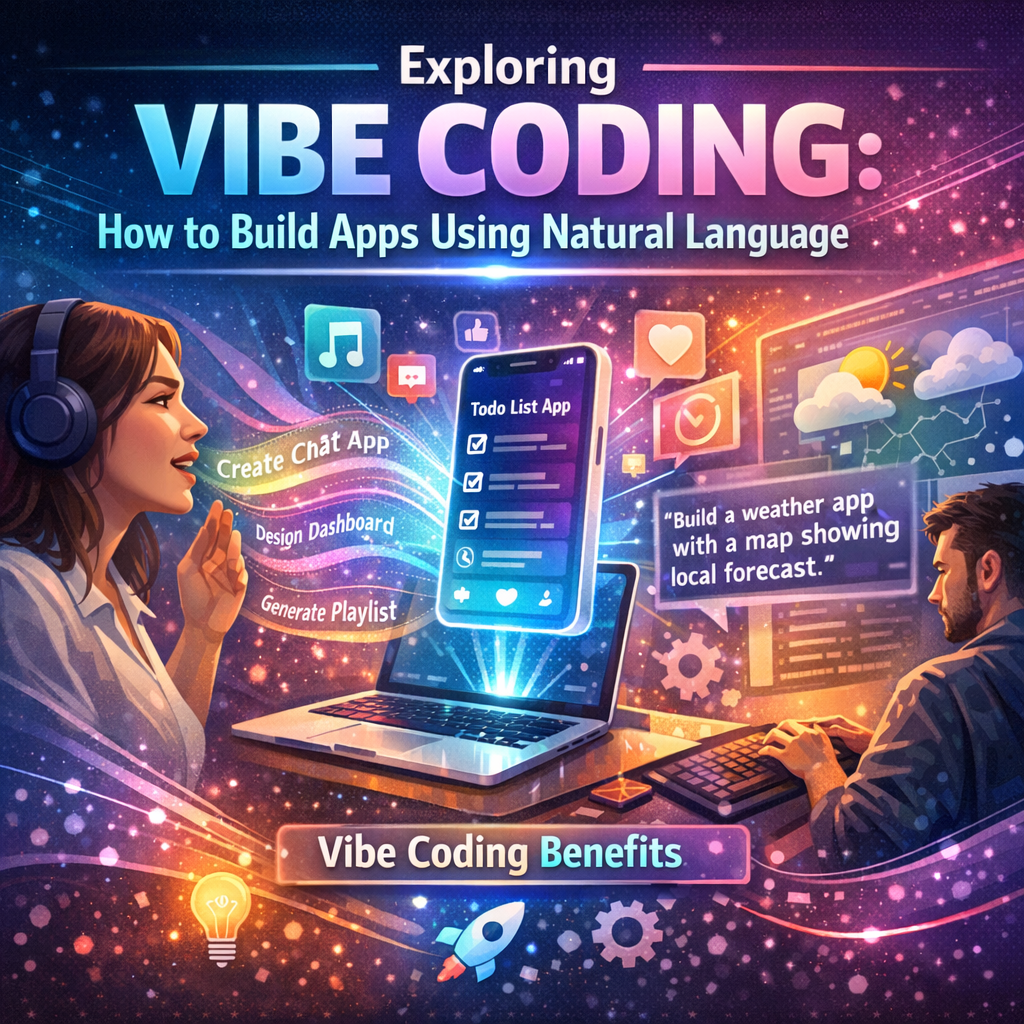
Exploring Vibe Coding: How to Build Apps Using Natural Language
What Is Vibe Coding? Building Apps With Natural Language
In the dynamic world of software development, new methodologies and techniques frequently emerge. Among these innovative approaches is Vibe Coding, a method that uses natural language to create applications. As technology advances, understanding these new trends becomes essential for developers and tech enthusiasts alike. This post explores the essence of Vibe Coding, its benefits, and how it’s changing the way developers approach app creation.
Understanding Vibe Coding
Vibe Coding is a development approach centered around the use of natural language processing (NLP) to build software applications. Instead of traditional coding languages filled with syntax and complex structures, developers can write commands in plain English (or other languages) and have those commands be interpreted by an AI to perform coding tasks.
The Process
- Input: Developers input their requirements in natural language.
- Conversion: Advanced NLP algorithms translate this input into code.
- Execution: The system executes the code and builds functional elements of the application.
Key Benefits of Vibe Coding
Increased Accessibility
One of the primary advantages of Vibe Coding is its accessibility. With the requirement to write traditional code removed, a broader range of individuals, including those without a technical background, can participate in the development process. This democratization of coding has the potential to unleash a wave of creativity and innovation previously confined to those who mastered specific programming languages.
Enhanced Productivity
By simplifying the coding process, Vibe Coding also significantly boosts productivity. Developers can focus more on the design and user experience aspects of their apps rather than getting bogged down by complex code syntax and bugs traditionally associated with programming.
Reduced Learning Curve
With Vibe Coding, the intimidating learning curve associated with mastering programming languages is substantially reduced. Beginners can make meaningful contributions much earlier in their learning journey, fostering more interest and retention in the field of technology.
How Vibe Coding Is Transforming App Development
The introduction of Vibe Coding into the tech scene is reshaping traditional app development methodologies in several ways:
- User-Centric Designs: Vibe Coding allows for more focus on user experience and functionality since the developers have more bandwidth to consider user feedback and iterate on designs rapidly.
- Agile Development: Changes can be implemented and tested quickly, embodying the true spirit of agile development.
- Cross-Disciplinary Collaboration: This approach encourages a collaborative environment where tech professionals and domain experts can work side-by-side to tailor applications more precisely to user needs without misinterpretations that can occur when converting domain-specific requirements into a technical blueprint.
Challenges and Considerations
Despite its numerous benefits, Vibe Coding also presents certain challenges:
- Dependency on NLP Accuracy: The effectiveness of Vibe Coding heavily depends on the accuracy of NLP models used. Misinterpretations by these systems can lead to errors in the application, which might be hard to debug without traditional coding skills.
- Security Risks: Turning natural language into code could potentially introduce security vulnerabilities if not handled properly. It requires robust NLP models and secure coding practices to ensure that applications are not only functional but also secure.
- Limited Control and Customization: More intricate and customized application elements may still require traditional coding to ensure precise behavior and performance efficiency.
The Future of Vibe Coding and Natural Language Programming
As AI and machine learning technologies continue to advance, the barriers between human languages and computer code are rapidly diminishing. Vibe Coding is at the forefront of this transformation, promising a future where anyone can build software as easily as they would describe it in conversation.
In conclusion, Vibe Coding represents a significant leap forward in making technology more accessible and versatile. By enabling more individuals to engage in app development, it paves the way for a more diverse, creative, and user-oriented creation of technology solutions. As this field grows, it will be fascinating to see how traditional roles in tech evolve and how companies adapt to this new paradigm.