

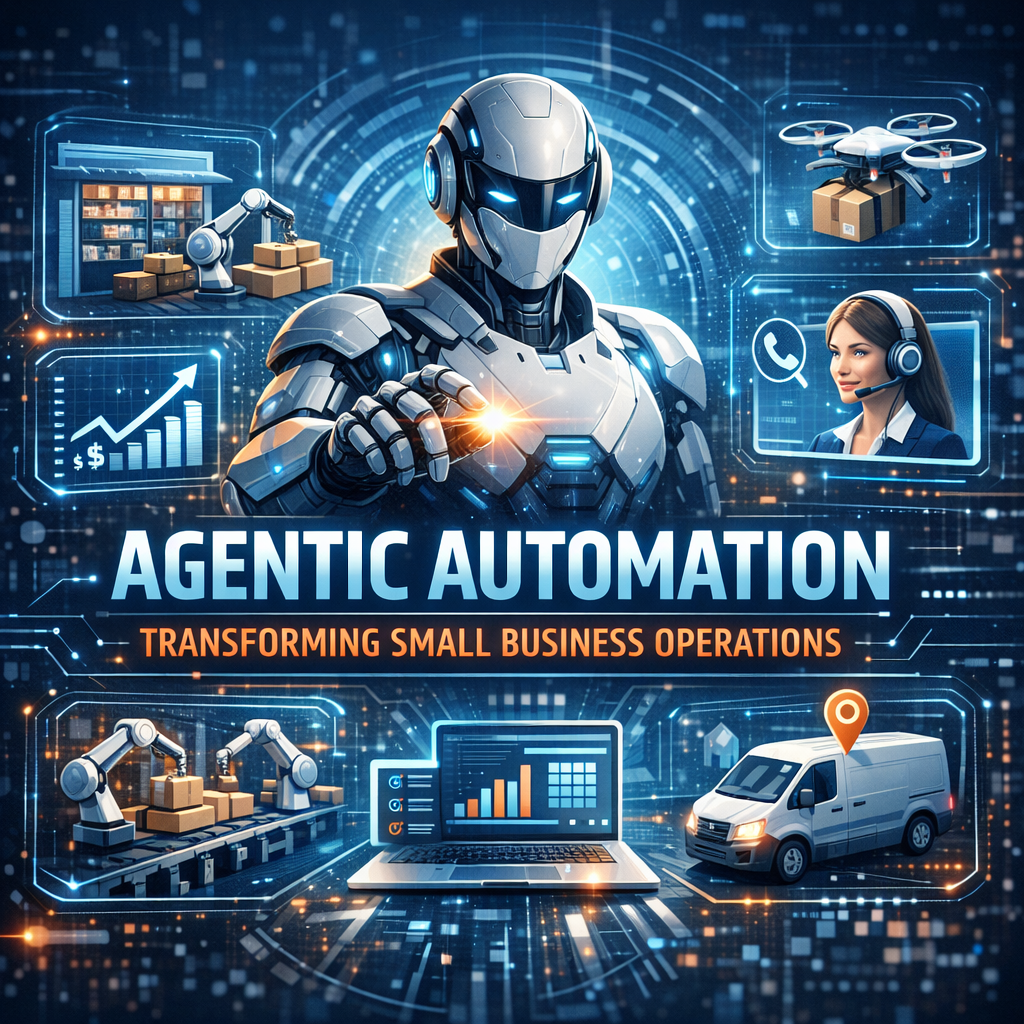
Agentic Automation: Transforming Small Business Operations
The Rise of Agentic Automation in Small Business Operations
Small businesses are increasingly harnessing the power of agentic automation to streamline their operations, enhance efficiency, and foster growth. This advanced form of technology goes beyond simple mechanistic tasks; it imbues systems with the capability to act autonomously, adapting to new information and environmental changes without human intervention. Let’s explore how this transformative approach is reshaping the landscape of small business operations.
Understanding Agentic Automation
Before delving into its applications, it is essential to understand what agentic automation entails. Unlike traditional automation that might only perform repetitive tasks, agentic automation involves systems that can make decisions and carry out complex problem-solving processes on their own. This is largely powered by advancements in AI and machine learning.
Key Features of Agentic Automation:
- Autonomy: Ability to operate without human input.
- Adaptability: Can adjust actions based on new data.
- Scalability: Easily scaled up or down according to business needs.
Transforming Small Business Operations
Small businesses, often limited by fewer resources and personnel compared to larger corporations, stand to gain significantly from integrating agentic automation into their workflows. Here are some key areas of transformation:
1. Customer Service Enhancement
Agentic automation enables the integration of advanced AI-driven chatbots and virtual assistants that can handle a wide range of customer inquiries without human oversight. This not only speeds up response times but also frees up human employees to focus on more complex customer service tasks.
2. Inventory and Supply Chain Management
Through the use of AI algorithms, small businesses can now automate complex inventory management tasks. These systems continuously analyze sales data, predict trends, and adjust orders and stock levels accordingly, ensuring optimal inventory control with minimal waste.
3. Financial Management and Bookkeeping
Automated financial management tools help small businesses manage their books with greater accuracy and less effort. From calculating expenses and earnings to preparing financial reports, these tools ensure that financial management is both streamlined and compliant with regulatory standards.
Real-World Impacts of Agentic Automation
To better understand the practical impact of agentic automation, consider these real-world applications in small businesses:
- Retail: Automated POS systems can predict consumer buying behavior and adjust inventory in real time.
- Healthcare: Small clinics use automated systems to handle patient records, schedule appointments, and even diagnose common ailments.
- Hospitality: From automated booking systems to customer service bots, these tools enhance user experience while optimizing operational efficiency.
Overcoming Challenges
Despite its benefits, the implementation of agentic automation is not without challenges. These may include:
- Initial Investment: The upfront cost of implementing automated systems can be high, though long-term savings are significant.
- Technical Expertise: Small businesses may require additional training for staff or the hiring of specialists to manage these sophisticated systems.
- Integration Issues: Integrating new automated systems with existing IT infrastructure can sometimes be complex.
Final Thoughts
Agentic automation represents a promising frontier for small business operations, offering opportunities to enhance operational efficiency and competitiveness in a crowded market. By embracing this technology, small businesses not only prepare themselves for future trends but also improve their current operational capacity significantly. Although challenges exist, the potential benefits of implementing agentic automation far outweigh the obstacles, making it a wise investment for the future of any small business.