
Unified Platforms vs. Fragmented Tech Stacks: Which Performs Better?
Why Unified Platforms Outperform Fragmented Tech Stacks
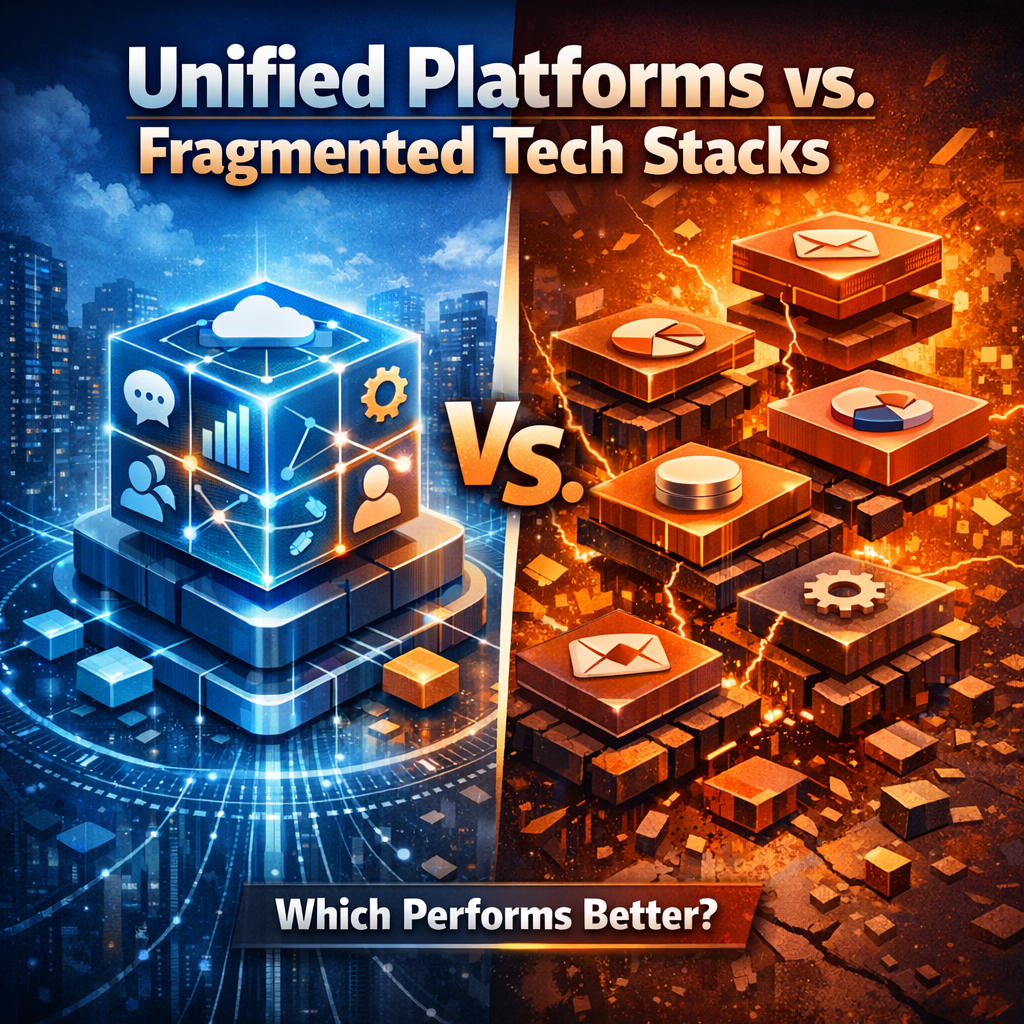
In today’s fast-paced tech landscape, the debate between unified platforms and fragmented tech stacks is more relevant than ever. Organizations face the challenge of choosing between a seamless, integrated solution or a custom-assembled collection of tools. This article explores why unified platforms often outperform their fragmented counterparts, bringing efficiency, scalability, and harmony to technology ecosystems.
Enhanced Productivity
Seamless Integration
Unified platforms provide a seamless integration of various tools and applications which are crucial for daily operations. This means data flows smoothly between processes, reducing the need for manual entry and the potential for errors. For instance, a unified CRM system may integrate effortlessly with email marketing, customer support, and sales tools, allowing teams to operate without constantly switching apps or duplicating data entry efforts.
Streamlined Training and Onboarding
Training staff on one integrated system is considerably more straightforward than on multiple disparate tools. A unified platform usually comes with a singular, coherent interface and user experience, reducing learning curves and training time. Consequently, new employees can hit the ground running, impacting productivity positively from the start.
Scalability and Flexibility
Easier Upgrades and Updates
Centralized platforms facilitate easier, more consistent upgrades and updates. When only one system requires maintenance, IT teams can deploy updates more efficiently and ensure compatibility across the entire system without worrying about disparate software versions or integration issues.
Adaptable to Business Growth
As organizations grow, their technology needs evolve. Unified platforms are designed with scalability in mind, allowing more straightforward expansions or reductions based on business demands. This adaptability makes it easier for businesses to respond to changes without overhauling their tech infrastructure entirely.
Reduced Costs
Lower Total Cost of Ownership
While the initial investment in a unified platform might be higher than piecing together individual applications, the overall cost over time often turns out lower. Since these platforms usually include support, maintenance, and upgrades, companies can avoid unforeseen expenses typically associated with multiple vendors, like disparate upgrade cycles and compatibility issues.
Consolidated Vendor Relationships
Dealing with a single vendor for multiple functions not only simplifies administrative tasks but also strengthens negotiation leverage. This consolidation can result in better terms and cost savings when renewing contracts or purchasing additional services.
Improved Security and Compliance
Unified Security Protocols
With data breaches and cyber attacks on the rise, security is paramount. Unified platforms are advantageous because they apply consistent security measures across the entire system. This uniformity helps in managing potential vulnerabilities more effectively than in fragmented systems, where each piece of software may have different security standards and protocols.
Simplified Compliance
Compliance with regulations such as GDPR, HIPAA, or SOX can be more straightforward with a unified platform, as there is only one system to audit and ensure compliance. This centralization reduces the complexity and resource allocation needed for compliance checks, which can be particularly taxing on IT resources in environments with multiple systems.
Better Data Management and Analytics
Centralized Data Insights
Unified platforms gather data across various functionalities and present it through comprehensive dashboards or reporting tools, providing critical insights that drive strategic decisions. This unified data collection and analysis typically outperform fragmented setups where data silos can prevent a holistic view of business operations.
Real-Time Decision Making
The ability to access and analyze data in real-time is a significant advantage of unified platforms. Real-time data provides businesses with the agility to make informed decisions quickly, respond to market changes, adapt strategies, and improve customer experiences promptly.
Conclusion
The transformation from a fragmented tech stack to a unified platform can dramatically improve an organization’s operational efficiency, cost-effectiveness, and competitive edge. While the transition requires upfront investment and change management, the long-term benefits of enhanced productivity, scalability, security, and data management often justify the effort. For businesses looking to thrive in a digital-first world, considering a unified platform is not just an option; it’s becoming a necessity.
Choosing the right technology solutions is crucial in today’s dynamic business environment. Unified platforms, by offering integrated solutions that streamline operations, enhance security, and simplify compliance, represent a strategic advantage for businesses aiming to maximize efficiency and growth.