

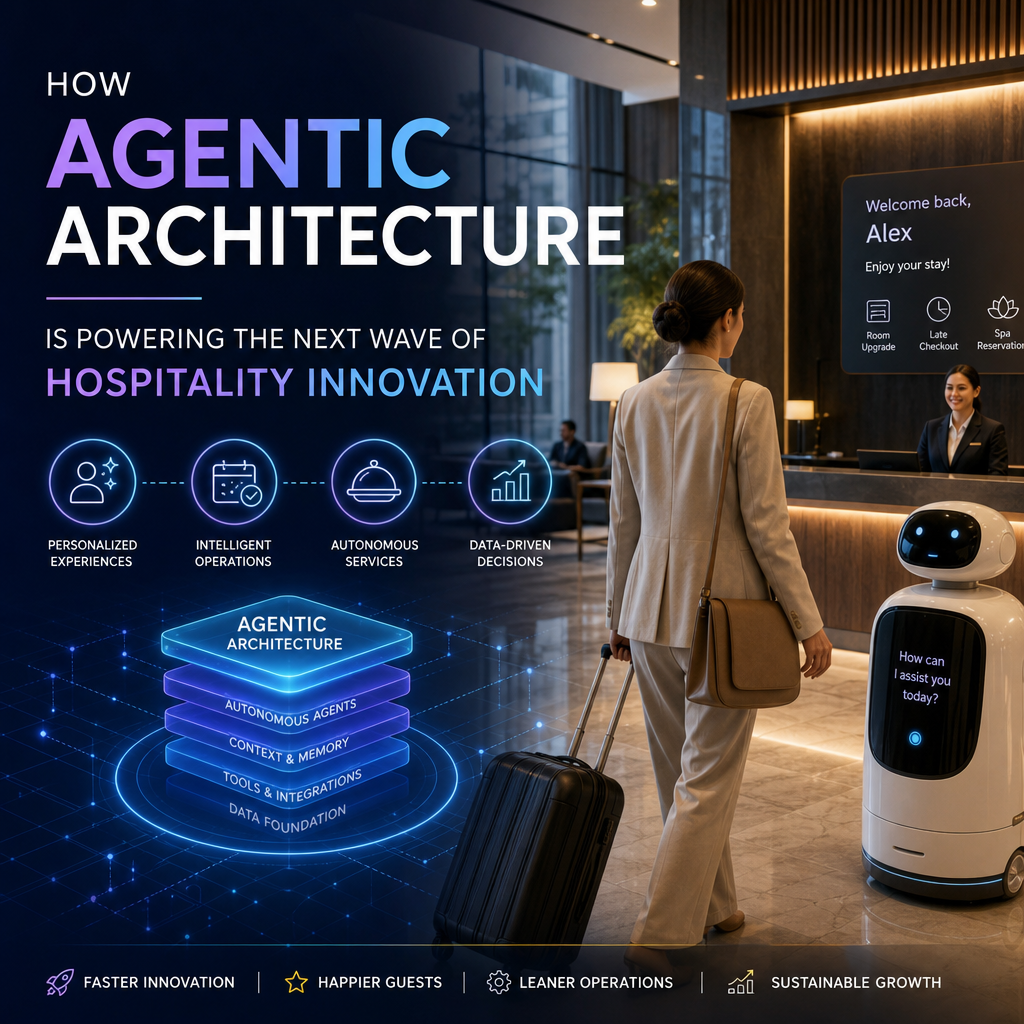
How Agentic Architecture Is Powering the Next Wave of Hospitality Innovation
The Shift From Automation to Agency in Hospitality
Hospitality has always been powered by people, timing, and attention to detail. But as guest expectations rise and operations become more complex, the industry is reaching the limits of traditional software automation. Basic rules-based systems can handle repetitive tasks, yet they often fall short when conditions change in real time.
That is where agentic architecture enters the conversation.
At its core, agentic architecture refers to systems built around intelligent agents that can perceive context, make decisions, coordinate actions, and improve outcomes with limited human intervention. In hospitality, this creates a powerful bridge between digital efficiency and personalized service. Instead of simply reacting to commands, systems can proactively support staff, anticipate guest needs, and optimize operations across the property.
What Makes Agentic Architecture Different?
Most hospitality technology stacks were designed around separate tools for reservations, property management, guest messaging, revenue, and service requests. These systems are useful, but they often operate in silos.
Agentic architecture changes the model by enabling software agents to work across those systems with a shared objective.
Key characteristics include:
- Context awareness: Agents understand guest preferences, booking details, operational status, and service history.
- Decision-making: They do more than trigger workflows; they choose next best actions based on goals and constraints.
- Coordination: Multiple agents can work together across departments like front desk, housekeeping, food and beverage, and revenue management.
- Continuous learning: Performance improves over time through feedback, results, and evolving patterns.
This approach is especially valuable in hospitality because every guest journey involves dozens of moving parts. A delayed check-in, a special occasion, a VIP arrival, or an unexpected maintenance issue all require fast and coordinated responses.
Why Hospitality Is Ready for This Next Wave
The timing matters. Several trends are pushing hotels, resorts, and travel brands toward more intelligent operating models.
First, guest expectations are now shaped by seamless digital experiences in other industries. Travelers expect personalization, speed, and convenience without losing the human touch.
Second, staffing pressure remains a real challenge. Teams are being asked to do more with less, especially during peak periods.
Third, data is finally abundant. Hospitality businesses now collect information from booking engines, CRM platforms, messaging tools, in-room technology, and loyalty programs. The problem is no longer access to data. It is turning that data into action.
Agentic architecture helps solve this by making technology operationally useful in the moment, not just informative after the fact.
Practical Use Cases Already Taking Shape
The real promise of agentic architecture is not abstract innovation. It is measurable impact in everyday hotel operations.
1. Smarter guest communication
An intelligent guest-facing agent can handle pre-arrival questions, confirm preferences, recommend upgrades, and coordinate special requests. If a family is arriving early, the system can check room readiness, notify housekeeping, and offer luggage storage or amenities before the guest even asks.
2. Dynamic service recovery
When something goes wrong, speed matters. An agentic system can detect a negative sentiment in a message, review the guest profile, alert the right manager, and recommend a recovery action based on past outcomes. That turns a complaint into a retention opportunity.
3. Cross-department orchestration
Imagine a late checkout request. Instead of becoming a manual chain of calls and updates, agents can assess occupancy, housekeeping schedules, and revenue implications before confirming the request. That creates a better decision for both the guest and the property.
4. Revenue and personalization working together
Agentic architecture can connect pricing logic with guest behavior. Rather than sending generic upsell offers, agents can identify the right product, at the right time, through the right channel based on intent and likelihood to convert.
The Building Blocks of an Agentic Hospitality Stack
For hospitality leaders, adopting this model does not mean replacing everything at once. In many cases, it means adding an intelligent orchestration layer on top of the systems already in place.
A strong foundation typically includes:
- Connected data sources across PMS, CRM, POS, booking, and messaging platforms
- Defined business goals such as higher conversion, lower response times, or improved guest satisfaction
- Specialized agents assigned to tasks like concierge support, operations coordination, or revenue optimization
- Human oversight for approvals, escalation paths, and quality control
- Feedback loops that measure outcomes and refine agent behavior
The best implementations keep humans in control while allowing agents to handle scale, speed, and consistency.
Innovation Without Losing the Human Element
A common concern is that more intelligent systems could make hospitality feel less personal. In practice, the opposite can happen.
When agentic architecture takes over repetitive coordination and low-value administrative tasks, staff gain more time to focus on high-value guest interactions. Front desk teams can be more present. Managers can spend less time chasing updates. Service teams can act with better information.
That is the real opportunity: not replacing hospitality, but amplifying it.
Guests rarely remember the software behind their stay. They remember whether things felt easy, thoughtful, and timely. If intelligent agents help teams deliver those moments more consistently, the technology has done its job.
The Future Belongs to Adaptive Hotels
The next wave of hospitality innovation will not be defined by standalone tools. It will be defined by adaptive ecosystems that can sense, decide, and act across the guest journey.
Agentic architecture is a key part of that evolution.
For hotel operators, owners, and technology leaders, the question is no longer whether AI will shape hospitality. It is how quickly the industry can move from fragmented automation to coordinated intelligence. Those who make that shift early will be better positioned to improve operations, empower teams, and create the kind of responsive, memorable experiences modern guests now expect.
