
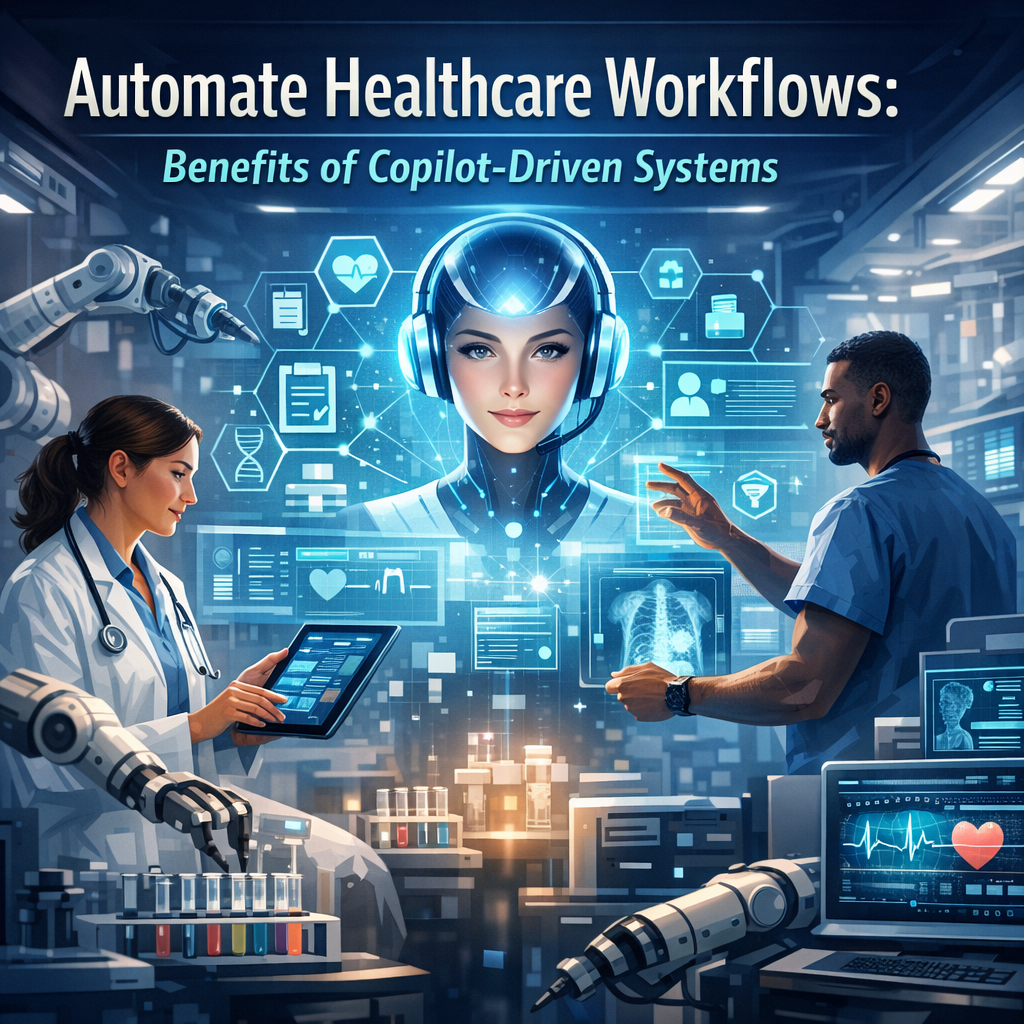
Automate Healthcare Workflows: Benefits of Copilot-Driven Systems
How Healthcare Teams Automate Workflows With Copilot-Driven Systems
In the fast-paced world of healthcare, efficiency and accuracy are paramount. It’s no surprise then that many healthcare teams are turning to advanced technology solutions to streamline operations. Among the most transformative technologies are Copilot-driven systems. These systems integrate AI and machine learning to oversee and manage various tasks, fundamentally reshaping how healthcare workflows are automated.
The Rise of Copilot-Driven Systems in Healthcare
Copilot-driven systems, often equipped with AI capabilities, are becoming pivotal in hospitals and clinics around the world. By handling repetitive tasks, these systems allow medical staff to focus more on patient care rather than administrative duties. The integration of these technologies is not just innovative; it’s proving essential for modernizing healthcare.
Key Benefits of Automation in Healthcare
1. Enhanced Patient Care
- Time Savings: Automation frees up medical professionals to spend more time with patients.
- Reduced Errors: Minimized manual entry reduces the risk of errors in patient data, improving treatment accuracy.
2. Increased Efficiency
- Streamlined Processes: Automated scheduling, billing, and compliance reporting cut down on bureaucracy.
- Faster Access to Information: Instant data retrieval speeds up diagnostic and treatment processes.
3. Cost Reduction
- Lower Overhead Costs: Automating routine tasks reduces the need for extensive administrative staff.
- Optimized Resource Use: Efficient use of equipment and space can lead to significant savings.
Implementing Copilot-Driven Automation
1. Identifying Areas for Automation
- Start by analyzing workflows that are repetitive and time-consuming. Common areas include patient intake forms, appointment scheduling, and medical billing.
2. Choosing the Right System
- Evaluate different Copilot-driven systems to find one that best meets the specific needs of the healthcare facility. It should integrate seamlessly with existing systems for a smooth transition.
3. Training Staff
- Proper training is crucial to ensure that all team members are comfortable and proficient with the new technology.
4. Continual Review and Adaptation
- Regularly assess the system’s impact and make necessary adjustments to optimize its benefits.
Real-World Applications of Copilot-Driven Systems
Emergency Response Coordination
- In emergency situations, quick response is critical. Copilot-driven systems can instantly gather patient history, suggest interventions based on symptoms and inform all necessary personnel, drastically reducing response times and increasing the chances of successful outcomes.
Patient Monitoring
- Continuous monitoring of patient vitals using AI-driven systems can alert healthcare teams about critical changes in a patient’s condition, facilitating immediate action even if a human monitor is momentarily unavailable.
Inventory Management
- Managing pharmaceuticals and medical supplies effectively is simplified with Copilot systems. These systems can predict stock needs, automatically reorder supplies, and even track expiration dates to minimize waste.
The Future of Healthcare with Copilot-Driven Automation
The healthcare industry stands on the brink of a revolution, with Copilot-driven systems at the helm. These innovations not only improve the efficiency of healthcare delivery but also enhance the quality of care provided to patients. As technology continues to advance, the scope of automation will expand, further elevating the health sector to unprecedented levels of operational excellence. For healthcare facilities around the world, embracing these technologies is not just an option, it’s a necessity to staying relevant and providing the best possible care in an ever-evolving world.